
Benefits, Types & How to Choose One

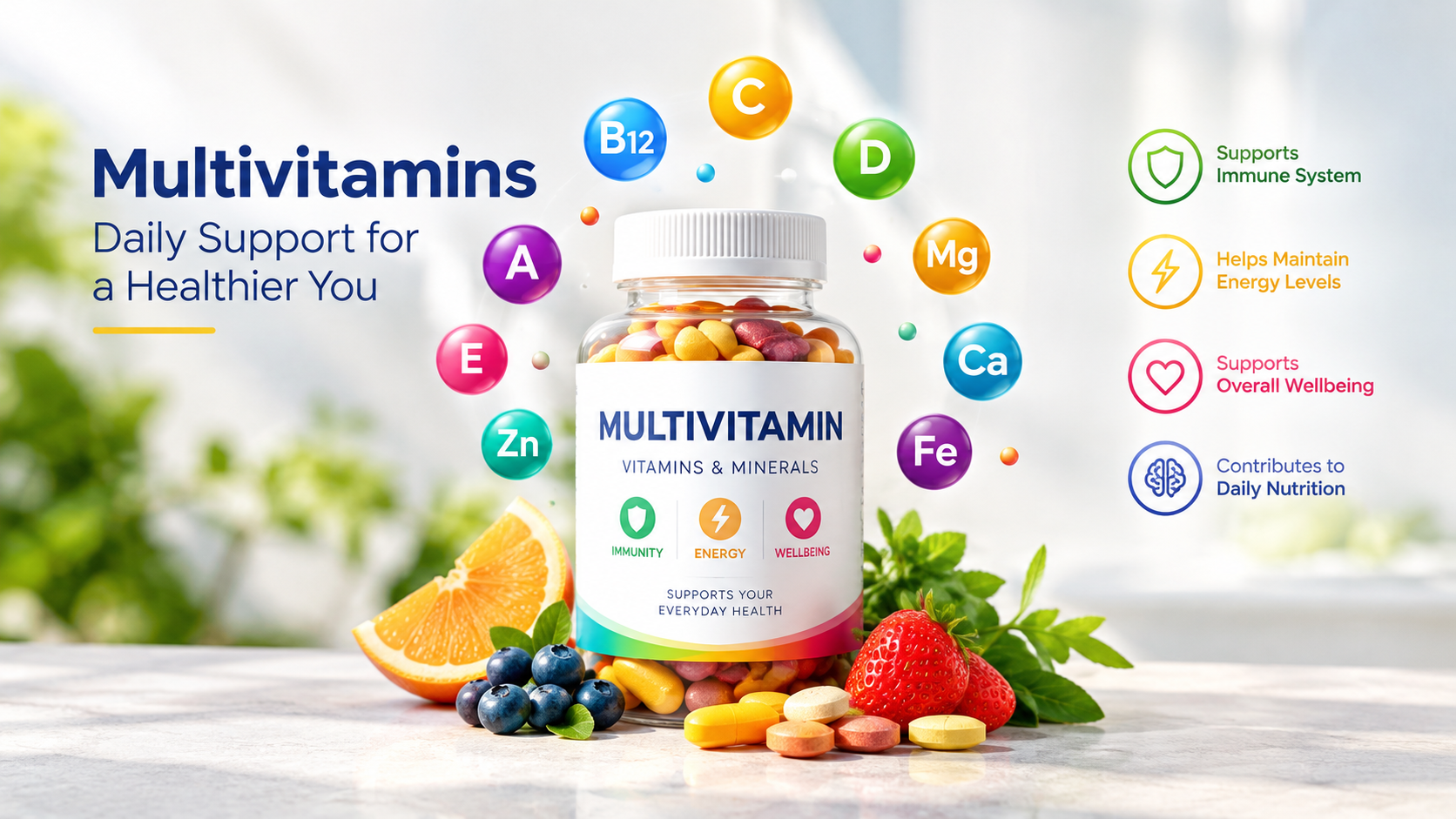
Multivitamins Explained: Benefits, Types & How to Choose One
Vitamins and minerals are essential nutrients that the body needs in relatively small amounts to function properly. A varied and balanced diet is generally the best way to get these nutrients, but some people may consider supplements when their diet does not provide enough of certain nutrients.
One popular type of supplement is a multivitamin.
But what exactly is a multivitamin, what does it contain and how do you choose one that’s right for you?
Let’s take a closer look.
What Is a Multivitamin?
A multivitamin, also called a multivitamin/mineral supplement, contains a combination of different vitamins and minerals.
There is no single standard formula for all multivitamins. Different products can contain different nutrients and different amounts, depending on who the product is designed for.
For example, you’ll find multivitamins designed for:
- Adults
- Men
- Women
- Children
- Older adults
- Different life stages
Some products are available as tablets, capsules, gummies, powders or other forms.
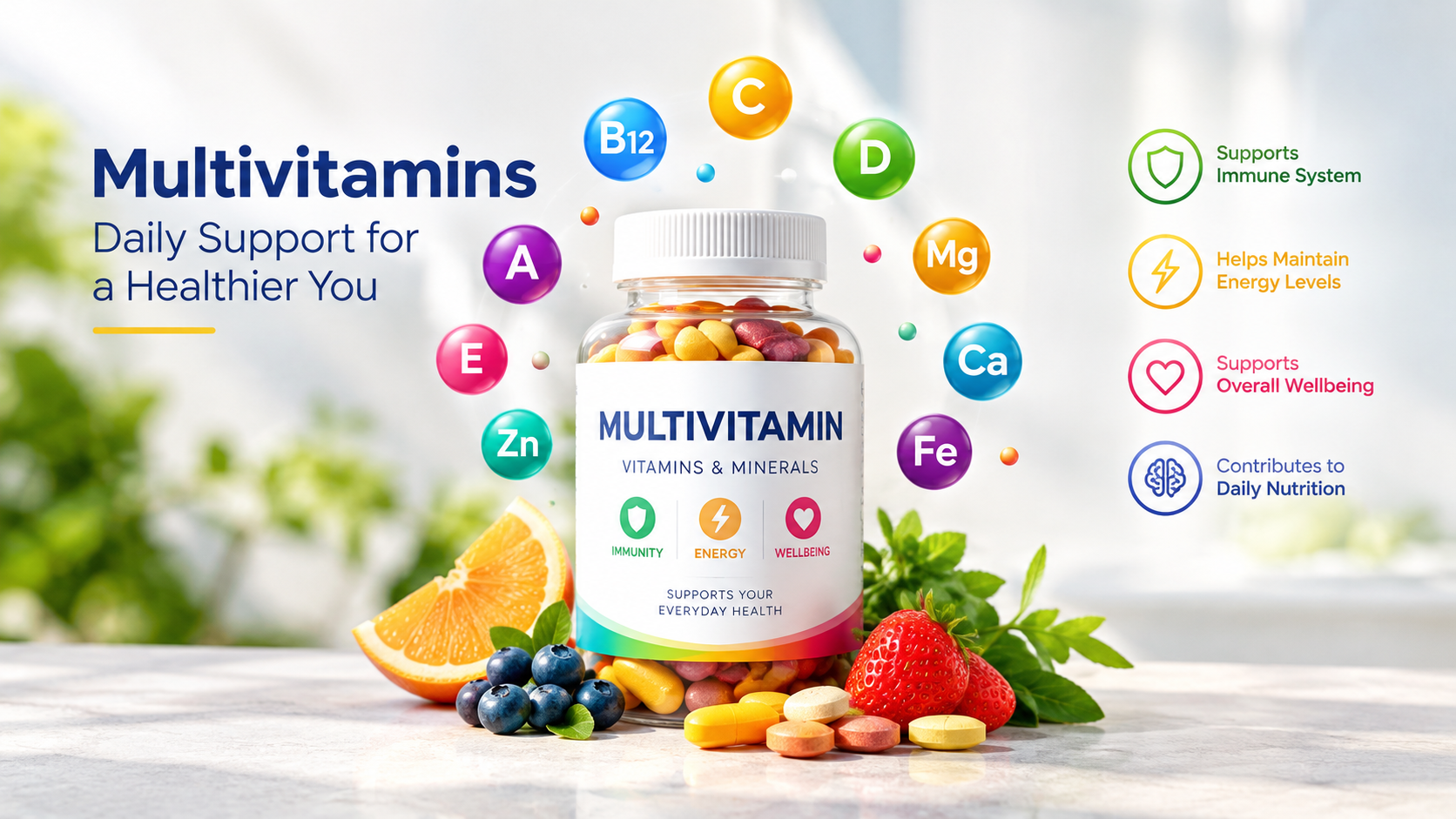
What Do Multivitamins Contain?
The ingredients vary from product to product.
Common vitamins found in multivitamin products can include:
- Vitamin A
- Vitamin B vitamins
- Vitamin C
- Vitamin D
- Vitamin E
- Vitamin K
Some multivitamins also contain minerals such as:
- Zinc
- Magnesium
- Iron
- Calcium
- Selenium
However, not every multivitamin contains all of these nutrients, so it’s important to read the product label before purchasing.
The NIH Office of Dietary Supplements notes that multivitamin formulas can vary considerably in both ingredients and amounts.
What Are the Benefits of Multivitamins?
The main purpose of a multivitamin is to provide a combination of vitamins and minerals in one supplement.
For people who don’t get enough of certain nutrients from their diet, a suitable supplement may help increase their intake.
However, multivitamins should not be considered a replacement for a healthy, varied diet.
Food provides more than vitamins and minerals — it also provides fibre and other beneficial components.
Who Might Consider Taking a Multivitamin?
Some people may have difficulty getting enough nutrients from food alone.
This can include people who:
- Have a limited or low-calorie diet
- Have a poor appetite
- Avoid certain food groups
- Follow certain vegetarian or vegan diets
- Have specific nutritional needs
- Are at particular life stages where nutrient requirements differ
The right supplement can vary depending on age, sex, diet and individual circumstances.
If you’re unsure whether you need a multivitamin, it’s sensible to speak with a healthcare professional.
Different Types of Multivitamins
There isn’t one multivitamin that is suitable for everyone.
Adult Multivitamins
Adult multivitamins are generally formulated to provide a combination of common vitamins and minerals for adults.
Multivitamins for Women
Some products designed for women contain different amounts of certain nutrients compared with general adult formulas.
Multivitamins for Men
Men’s formulas can also differ in their nutrient combinations and amounts.
Children’s Multivitamins
Children’s products are usually formulated with amounts appropriate for children. They should only be used according to the product’s age guidance.
50+ or Senior Multivitamins
Some products designed for older adults contain different combinations of nutrients, such as more vitamin D or B12 and less iron than some products designed for younger adults.
How to Choose a Multivitamin
When choosing a multivitamin, don’t just look at the number of ingredients.
Consider:
1. Check the Nutrient List
Look at which vitamins and minerals are included and how much of each nutrient is provided per serving.
2. Consider Your Age and Life Stage
A product designed for children, adults, older adults or pregnancy can have very different formulations.
3. Check the Serving Size
Some products require one tablet per day, while others may require more than one serving.
Always follow the manufacturer’s instructions.
4. Avoid Taking Too Many Supplements Together
Taking several supplements containing the same nutrients can increase your total intake.
The NIH warns that excessive intake of certain nutrients can be harmful, so it’s important to check labels and avoid unnecessarily doubling up on supplements.
Are Multivitamins Safe?
For most people, a basic multivitamin used according to its directions is unlikely to cause harm. However, more isn’t always better.
Some vitamins and minerals can cause problems when taken in excessive amounts.
For example, taking multiple products containing iron, vitamin A, zinc or other nutrients can increase your overall intake.
If you’re pregnant, taking medication or have a medical condition, speak with a healthcare professional before starting a supplement.
People taking blood-thinning medication such as warfarin should particularly discuss vitamin K-containing supplements with their healthcare provider because vitamin K can affect the medication’s effectiveness.
Multivitamins vs a Healthy Diet
A multivitamin is a supplement, not a replacement for healthy food.
A balanced diet can provide vitamins, minerals, fibre and many other nutrients.
That’s why it’s generally better to focus on a varied diet first and use supplements when appropriate.
Multivitamin Gummies or Tablets?
Multivitamins are available in different formats.
Gummies
- Easy to take
- Convenient for people who dislike tablets
- Often available in different flavours
Tablets
- Common supplement format
- Often provide a broad combination of vitamins and minerals
- Usually easy to store and use
Capsules
- Another convenient option
- Available in different formulations
The best format is generally the one that suits your preferences while providing nutrients appropriate for your needs.
Final Thoughts
Multivitamins can be a convenient way to supplement your intake of vitamins and minerals, particularly when dietary intake may not provide enough of certain nutrients.
However, there is no universal multivitamin that’s best for everyone. Nutritional needs vary depending on age, sex, diet and life stage.
Always read the product label, follow the recommended serving and consider professional advice if you’re unsure which supplement is suitable for you.
Explore Mifcart’s Vitamins & Supplements collection to discover a range of multivitamin products for different needs.